
Soledad Resident Lookup: Match the Record
Monterey County and California offices hold different pieces of a Soledad resident lookup. Start with the fact already known, then choose the record closest to it. A parcel or assessment record can tie an owner to a situs address, while a court index can show that a named party appears in a case. Neither one proves every person who lives at an address. The Monterey County Property Inquiry accepts a Fee Parcel or Assessment Number, not a public name or address search. The California My Voter Status tool is an authenticated self-lookup, not a street list.
| Record | What It Confirms | Where | Access |
|---|---|---|---|
| Parcel and assessment roll | Owner, situs, value, status, exemptions, and parcel traits | Monterey Property Inquiry and GIS | Free by parcel identifier; counter or data request |
| Voter record | Registration residence, status, party, and election details | My Voter Status | Authenticated self-lookup; qualified file request |
| Court index | Named party, case number, type, status, and filing date | Monterey Superior Court | Free portal; clerk counter and paid research options |
| Recorder instrument | Party name tied to a deed, lien, map, date, and reference | Monterey Recorder | Current counter access; historical index from 1850 to 1977 |
| Vital record | Birth, death, marriage, divorce, and related family facts | County Recorder or CDPH Vital Records | Informational or authorized copy rules apply |
| Business or FBN filing | Entity, agent, officer, registrant, partner, and filing address | California Bizfile or County Clerk | Free filing PDFs; county FBN work is by counter or file request |
| Professional license | Credential, status, address of record, and discipline where shown | California DCA and board portals | Free public search; specialized boards vary |
The strongest starting point depends on the clue. A known parcel favors GIS and the assessment roll. A court concern favors the party search. A family event points to the Recorder or CDPH. A trade name or credential points to Bizfile, a license board, or the County Clerk. The result is a lead until two independent attributes agree.
Note: A parcel record can establish an owner or situs, but it cannot by itself establish who lives at the address.
Soledad Resident Lookup in Court
For a Soledad resident lookup involving a case, use the Monterey Superior Court case search guidance and its public portal. The portal needs no registration and generally exposes current and completed cases dating to 2008. Criminal electronic information reaches from November 1992 to the present. Criminal matters arising in South County are processed in Salinas. There is no separate statewide California trial-court party index that replaces the county search.
| Search mode | Field | Required rule | Format note |
|---|---|---|---|
| Case | Case Number | Yes | At least 5 characters; add * for a wildcard |
| Party | First Name | Yes | At least 3 characters; add * for a wildcard |
| Party | Last Name | Yes | At least 4 characters; add * for a wildcard |
| Business | Business Name | Yes | At least 4 characters; add * for a wildcard |
The search has Clear and Search controls. The verified result list uses a narrow inventory: Case Number, Case Name, Case Status, Filing Date, and Case Type. Ten items appear per page by default. “No Cases Searched Yet” is the initial state, while “No Cases Found” means the submitted terms returned no match. A name hit is not a finding of liability or identity; it is a docket lead that needs context.
The official Monterey court search page is the source for the public interface shown below.
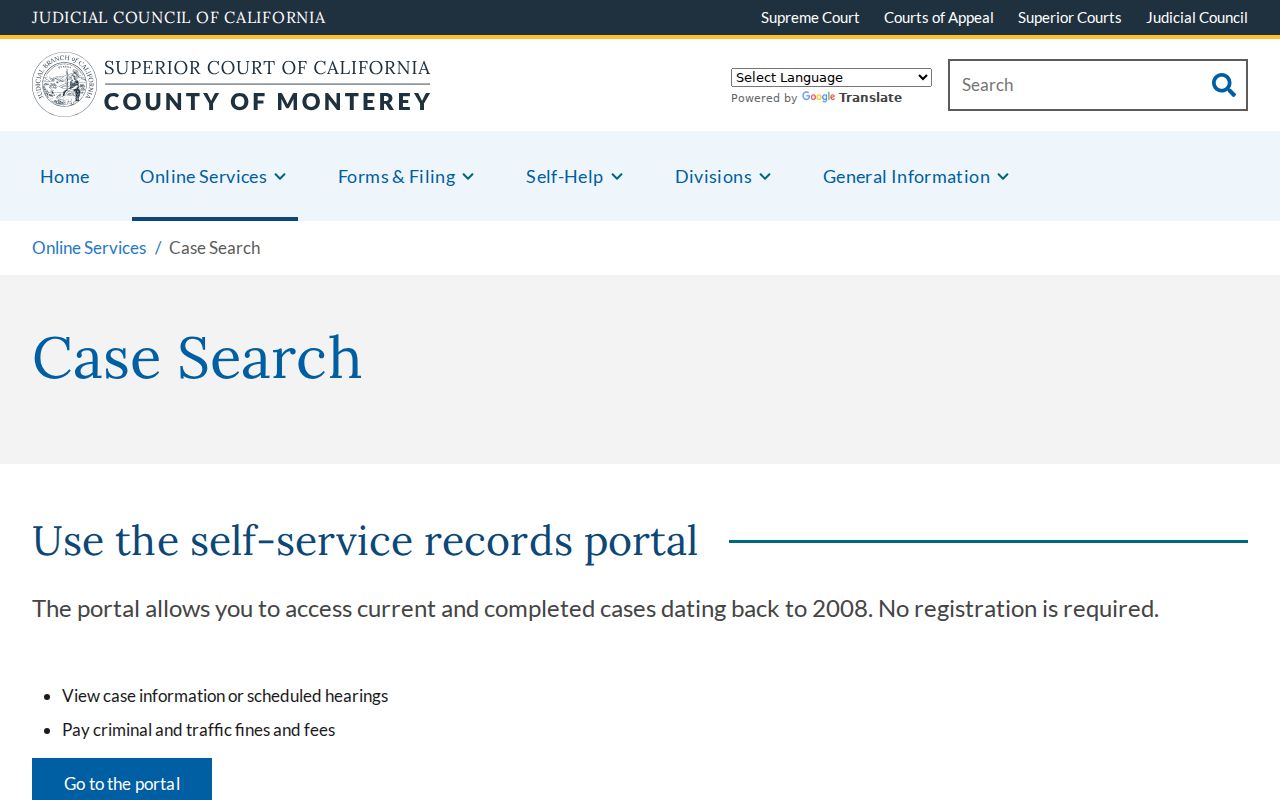
The court search view helps distinguish a party index from a complete file. A populated case detail, linked-document set, and redaction inventory were not verified from the captured result, so a clerk request is the next step when the index is not enough.
| Result field | What it tells a Soledad resident lookup |
|---|---|
| Case Number | The court identifier used for a later file or copy request |
| Case Name | The indexed case caption, which may contain several parties |
| Case Status | The status displayed in the public list, not a full disposition history |
| Filing Date | The date used to place the matter in time |
| Case Type | The category that helps separate civil, family, probate, criminal, traffic, or small-claims results |
Verifying a Soledad Resident Across Records
A careful resident lookup treats a name as a starting label, not a unique key. Normalize initials, hyphens, accents, married or maiden forms, and Spanish compound surnames before comparing results. Then anchor the name to the fact that matters most. An APN and situs can connect a parcel to a deed trail. A court case number can connect a party name to a filing. A vital index can connect an event date to a family relationship. The match becomes stronger when two attributes, such as a name plus date or a name plus place, agree across independent custodians.
- Write down the known name form, approximate time, city or county clue, and the reason for the search.
- Start with the closest record. Use GIS for a known address, the court portal for a case clue, or the Recorder for an instrument clue.
- Run the Monterey party search with the required minimum characters and a wildcard when spelling or a name ending is uncertain.
- Compare the result with a vital, deed, license, business, or historical source, then ask the custodian for a copy if proof is needed.
- Docket
- A court's running record of a case, including its number, filings, dates, and status entries.
- Index versus image
- An index is a searchable pointer. An image is the scanned or filed document, which may require a copy request, a fee, or permission.
- Certified copy
- A copy sealed or issued by the custodian as a true official copy for a purpose that accepts certification.
- Informational copy
- A vital-record copy marked for information that cannot establish identity in the same way as an authorized certified copy.
Court viewing and copying have separate channels. Civil, family, and probate file viewing is at 1200 Aguajito Road in Monterey from 8 to 3:30. Criminal requests go to Records at 240 Church Street in Salinas. A clerk name search costs $15 when the number is unknown or research exceeds ten minutes. Copies are $0.50 per page, and certification adds $25 per document plus pages.
Soledad Resident Heir Trails
One useful human reason for a Soledad resident lookup is to connect a deceased owner with an estate or an heir. The trail is usually not a single name search. Begin with a death notice or obituary, then look for a probate petition, order, or distribution document in the Monterey Superior Court file. A distribution deed or related instrument can then connect the estate to a recorded parcel. The research goal is a documented chain, not an assumption that every person named in a pleading received property or still lives locally.
- Search the Soledad Bee and other local newspaper material at the Soledad Branch for a death, family, property, or executor clue.
- Use the court's probate index and file-access rules to identify the decedent, representative, petition, order, and any public distribution record.
- Take the party name, parcel identifier, and legal description to the Monterey Recorder for the instrument reference and copy route.
Public probate pleadings may identify a decedent, representative, and heirs, but confidential, sealed, or restricted material is not opened by a general request. A distribution deed can be important evidence of title transfer, yet it does not prove current occupancy. Keep the event date, parcel, legal description, and source office with the name so a later resident lookup does not collapse several people into one.
The Monterey civil, family, and probate records page explains the file-viewing and copy path used for the court portion of an heir search.
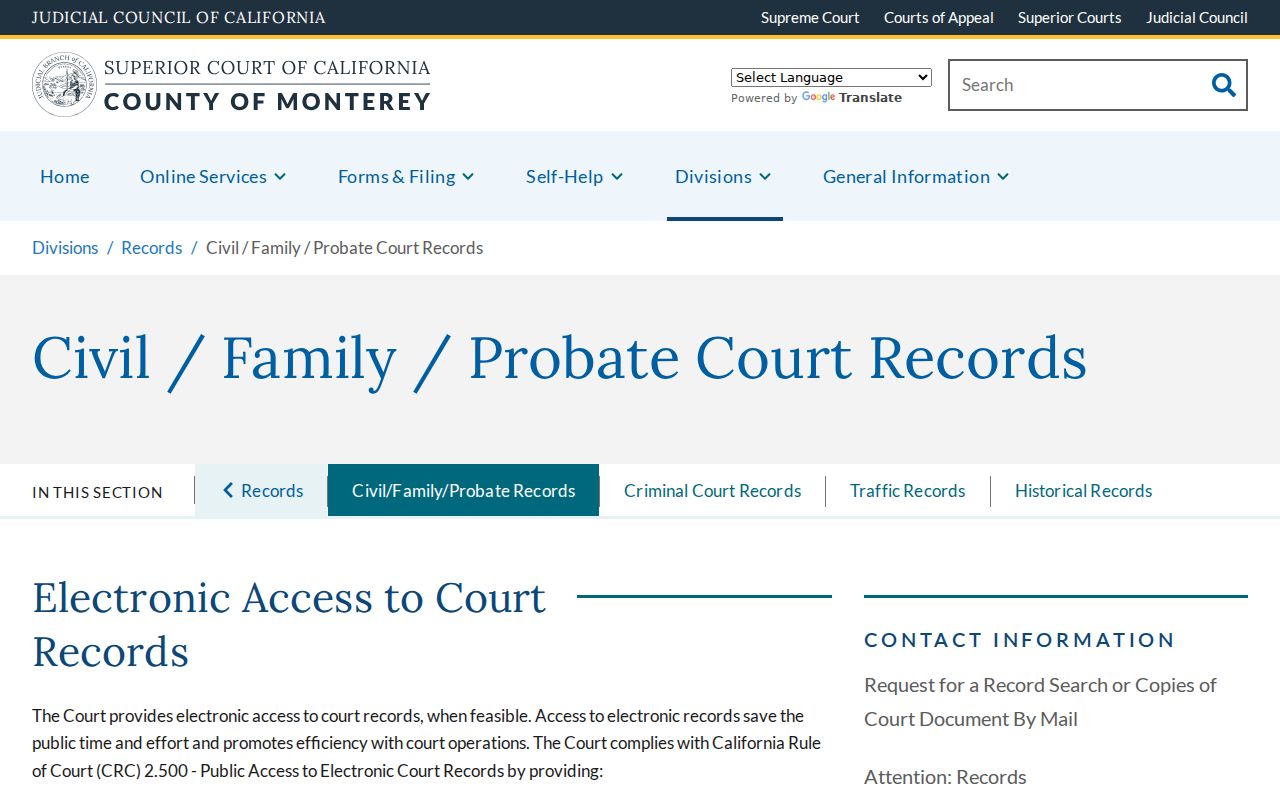
The records page reinforces the difference between a public index and the file held by the court. A request for an heir trail should identify the case or document as narrowly as possible.
Soledad Classmates, Birth Parents, and Records
A former-classmate search in Soledad is better served by historical material than by a broad name compilation. The Soledad Branch lists the Salinas Californian and Salinas Valley Tribune, offers microfilm and scanning, and holds catalog evidence for Soledad Bee and Gonzales Tribune reels. The Monterey FamilySearch Center provides local books, computers, and scanners. Newspapers, school lists, yearbooks when held, and lawful alumni contacts can supply a time and place that a modern index lacks. The historical volumes themselves are described in the Soledad city directory collections resource.
Birth-parent and adoption questions require an official route. CDPH Vital Records maintains statewide birth, death, fetal-death, marriage, divorce registration, and amendment services, while the Monterey County Recorder is the local copy custodian for county records. California began statewide civil registration in 1905, but access does not follow a simple public-opening age. Health and Safety Code sections 103525-103526 govern authorized certified-copy access and informational copies of many nonconfidential records. Adoption files remain confidential unless a statutory or court-authorized process applies. A regular resident lookup cannot bypass that rule.
Confidential marriage records are also restricted under Family Code section 511. Use the current Monterey vital-record application for the record type, event details, applicant information, relationship or authorized category, purpose, signature, and copy choice. Mail requests for authorized copies require notarization. A separate application is used for each record, and a no-record search retains its search fee.
Soledad License and Business Lookup
Business and credential records can corroborate a name without pretending to be a residence roll. California Bizfile searches by entity name or file number. An entity-name query needs at least three characters, behaves as a keyword or contains search, and caps the basic result set at the closest 500 matches. Filing PDFs are free, while certified orders require an account. Statements of Information may show officers or managers, an agent for service, mailing or service addresses, status, and filing date.
The California Department of Consumer Affairs advanced search accepts board or bureau, license type, license number, business name, first name, last name, and registry number, with added city, county, status, discipline, and public-document filters.
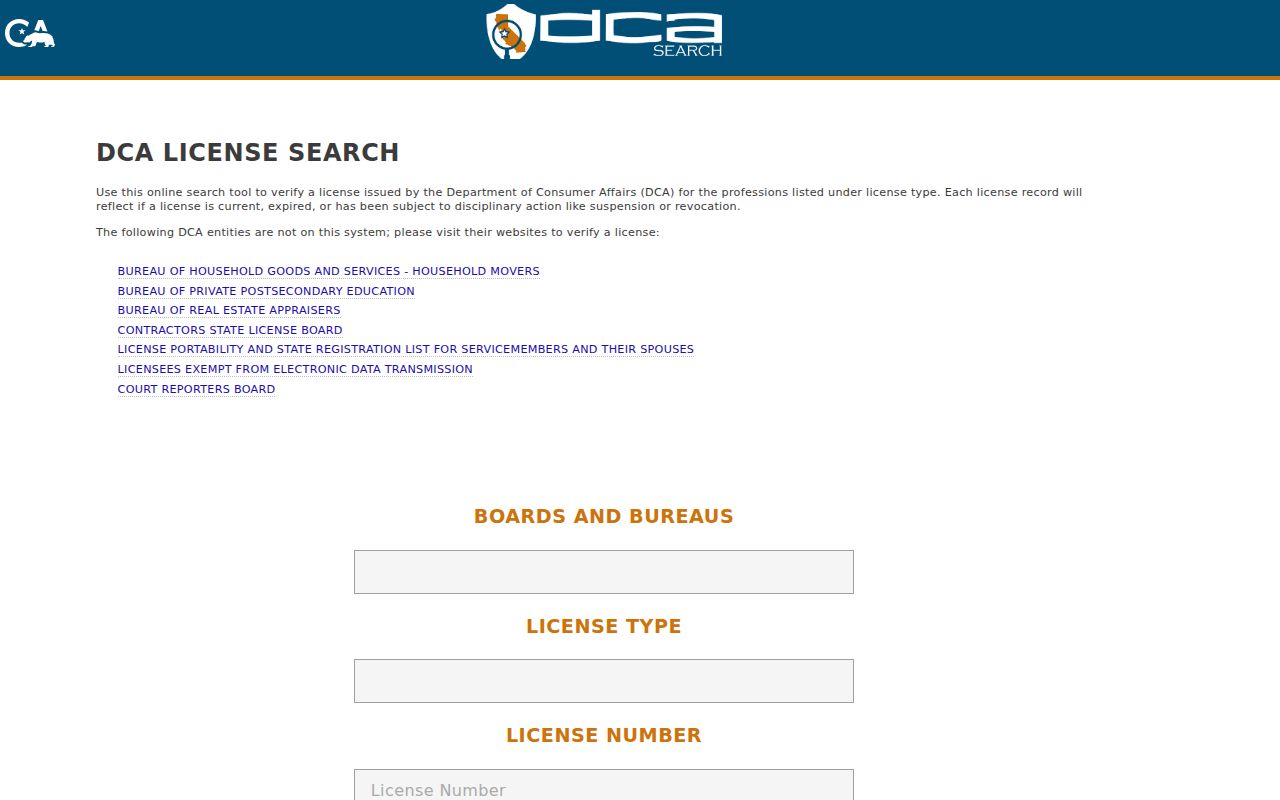
A DCA result may include license type, number, status, expiration, address of record, and discipline. An address of record is a credential field, not proof of a private home or current presence.
For a Soledad contractor, the California Contractors State License Board check adds license number, business name, personnel, city, ZIP, and classification routes.
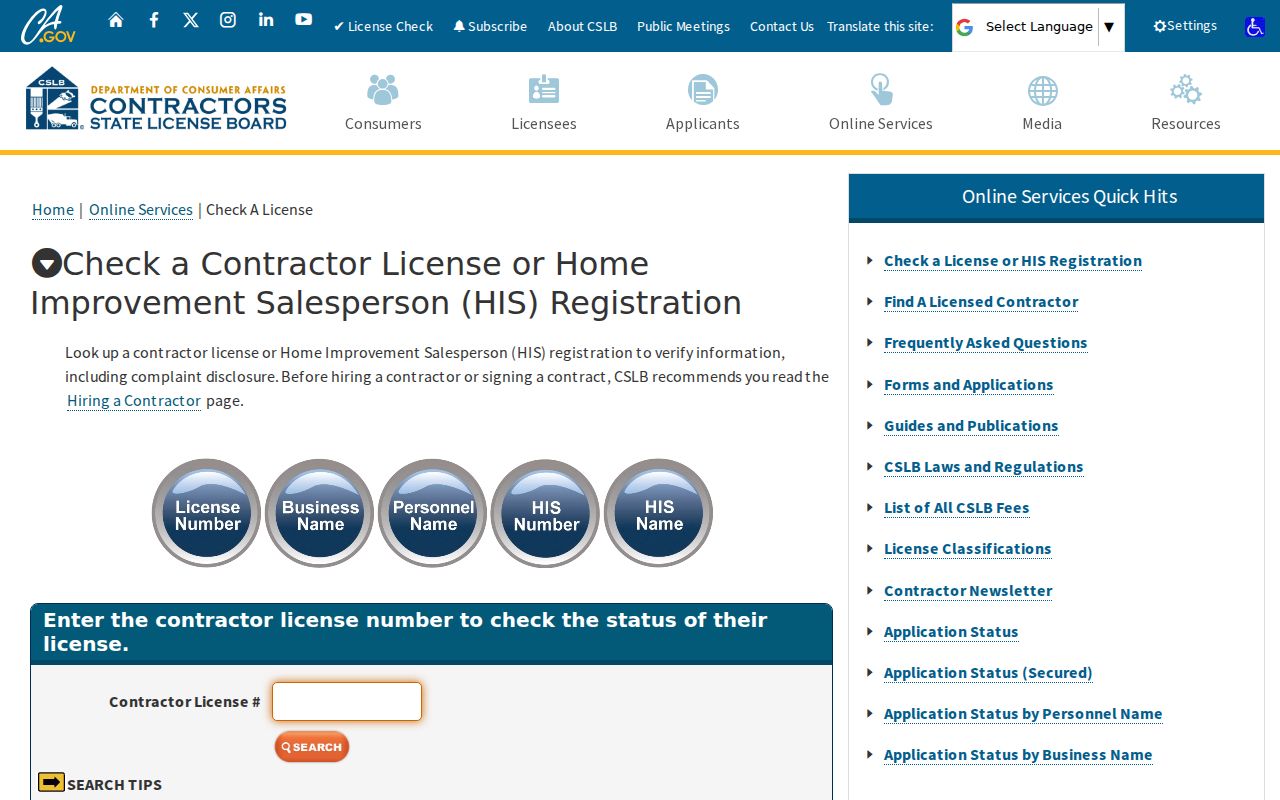
CSLB can return contractor status, classification, bond, and personnel fields. The ZIP mode supports a credential search, not a list of every Soledad resident.
Alcohol license research has its own official route through the California Department of Alcoholic Beverage Control license lookup, which supports licensee, address, city, DBA, and city or ZIP reports.
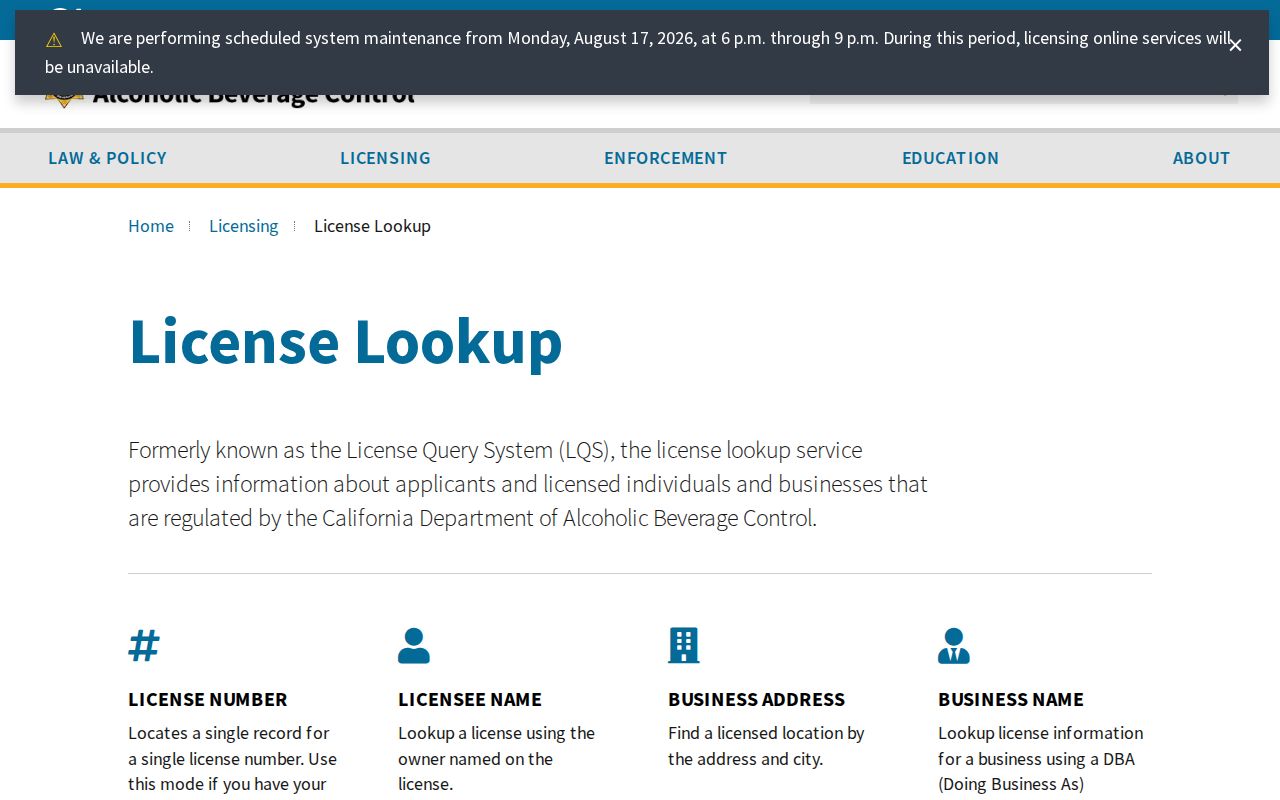
ABC results can connect a person or business to a regulated license record. Treat the licensee, premises, status, and type as the official fields, and verify any identity match with the issuing board.
Federal matters use the PACER Case Locator rather than Monterey's county portal. A federal locator result is another docket lead, not a substitute for the federal court file or a reason to merge same-name records.
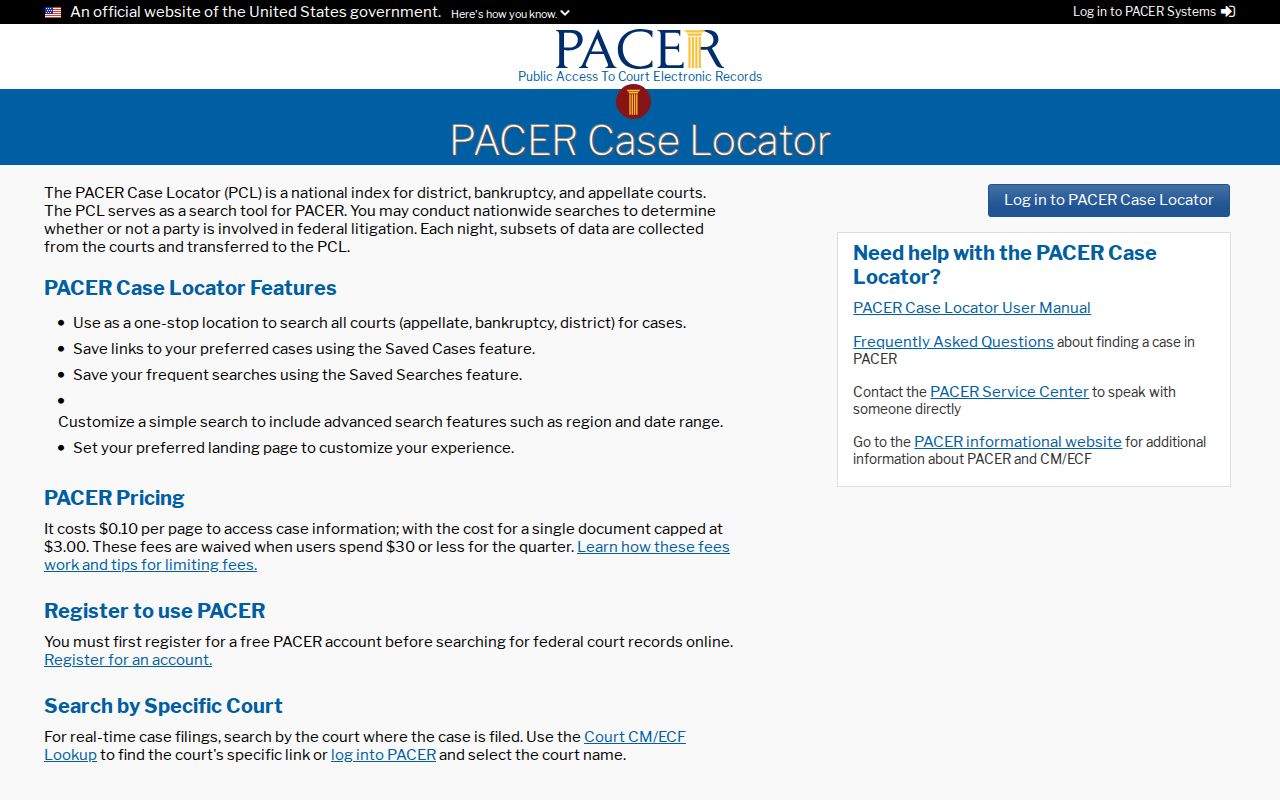
The PACER image shows why county and federal searches must stay separate. The court system that holds the case is part of the identity check.
Soledad Lookup Fallbacks at the Custodian
Online access is only one channel in a Soledad resident lookup. The Monterey Recorder offers counter research at 168 W. Alisal Street in Salinas, mail requests through P.O. Box 29, and phone assistance at 831-755-5041. A mail copy request should identify the document number or reel and page, recording year, at least one indexed party name, and document type. The posted historical grantor-grantee indexes reach from 1850 through 1977; current official records are described as counter-accessible, with no verified anonymous current web index.
For municipal records, the Soledad City Clerk public-records request route accepts email at cityclerk@cityofsoledad.gov, fax at 831-678-3965, counter delivery, and an electronic form. The Clerk identifies responsive departments and gives a determination within ten days, subject to statutory extensions. A California Public Records Act request does not make the City create a new document, research facts for the requester, or honor a standing request.
Vital copies use the County Recorder or the statewide CDPH fallback by mail or counter. The 2026 CDPH schedule lists $31 for a birth copy, $26 for a death copy, $19 for a marriage copy, and $18 for a dissolution certificate. The state fee information should be checked with the current application because eligibility and copy type matter. A narrow request is safer than a broad name request when a portal ends.
Legal Boundaries for a Soledad Resident Lookup
California's access rules separate public business records from protected personal data. My Voter Status authenticates the voter, while third-party voter-file disclosure is limited to qualified election, scholarly, journalistic, political, or governmental purposes under Elections Code sections 2188 and 2194. Unauthorized voter-data use can be a misdemeanor under section 18109. Safe at Home can provide eligible threatened people with a substitute address, mail forwarding, an agent for service, confidential voter registration, and some DMV suppression. It limits new disclosure but does not erase old public records.
California privacy rights also include knowing, deleting where an exception does not apply, correcting, opting out of sale or sharing, and limiting sensitive-data use under the CCPA and CPRA. DROP provides one request to registered data brokers. Processing began August 1, 2026. These rights do not turn a resident lookup into a promise that every public record will disappear, and statutory restrictions still control court, voter, DMV, adoption, and vital records.
Lawful use. A Soledad resident lookup is for personal, lawful research such as family history, estate work, or reconnecting. Using records to stalk, harass, intimidate, or harm a person is prohibited and can trigger California criminal penalties.