
Start With a Soledad Resident Clue
A name and a street lead to different records. A known parcel is strongest for an ownership question. A court case number is strongest for a court file. An event date and relationship matter more than a name alone when ordering a birth, death, or marriage copy. For older Soledad households, the library and historical collections may reveal a person whom a modern roll cannot show.
The official trail is layered. Property records identify an owner or parcel, not every person who lives there. A voter lookup authenticates the voter rather than offering a street list. A recorder index ties a party to an instrument, while a city directory or newspaper may show a household at a point in time. Choose the closest record first, then confirm with a second attribute such as an address, date, occupation, relative, or parcel description.
- Write down the clue and its date range before searching, including spelling variants, initials, accents, and compound surnames.
- Use Monterey County Parcel Report when the clue is a Soledad address, then record the APN and situs details.
- Use the court, recorder, license, or business system that matches the question, rather than treating every result as a resident record.
- Move to Soledad Branch microfilm, county directories, Sanborn sheets, or FamilySearch collections when the question is historical.
- Ask the custodian for a narrow record when an online tool ends, and keep the request tied to a known date or identifier.
Soledad Resident Records Offices
Soledad records spread across city, county, and state custodians. Salinas is the Monterey County seat, so land and court work often moves north from the city. The Recorder counter is the practical route for current instruments. The Assessor portal is useful after an APN is known. The City Clerk handles municipal records and CPRA requests, while Soledad Branch supplies the local newspaper and directory shelf.
Monterey County Recorder
168 W. Alisal Street, first floor
Salinas, CA 93901
831-755-5041
Monterey County Assessor
County property inquiry and parcel data
Monterey County, CA
Use the county office contact route
The California Public Records Act, Government Code section 7920.000 et seq., supports requests for agency writings about public business. A city determination is generally due within ten calendar days, with a possible fourteen-day unusual-circumstances extension. That is a determination date, not a promise that copies will arrive that day.
Soledad Resident Property Inquiry
The county property inquiry is a key Soledad residents directory source only after a parcel identifier is known. Its public search does not accept an owner name or street address. A Fee Parcel number or Assessment Number is the required bridge. A known street address should first go through the Soledad street directory by address workflow and the official Parcel Report map.
| Search field | Use | What it can lead to |
|---|---|---|
| Fee Parcel number | Assessment-roll key | Parcel status, values, exemptions, and characteristics |
| Assessment Number | Alternative identifier | Property inquiry record and map details |
| APN or address utility | Separate lookup route | Property address, assessed values, exemptions, and map page |
The Parcel Report service adds APN, current document reference, land-use code, taxability, tax-rate area, land and structure values, manufactured-home value, situs address, and physical characteristics. Treat the map as a lead. The county warns that GIS can differ from official rolls, surveys, and recorded maps.
Soledad Resident Voter Status Limits
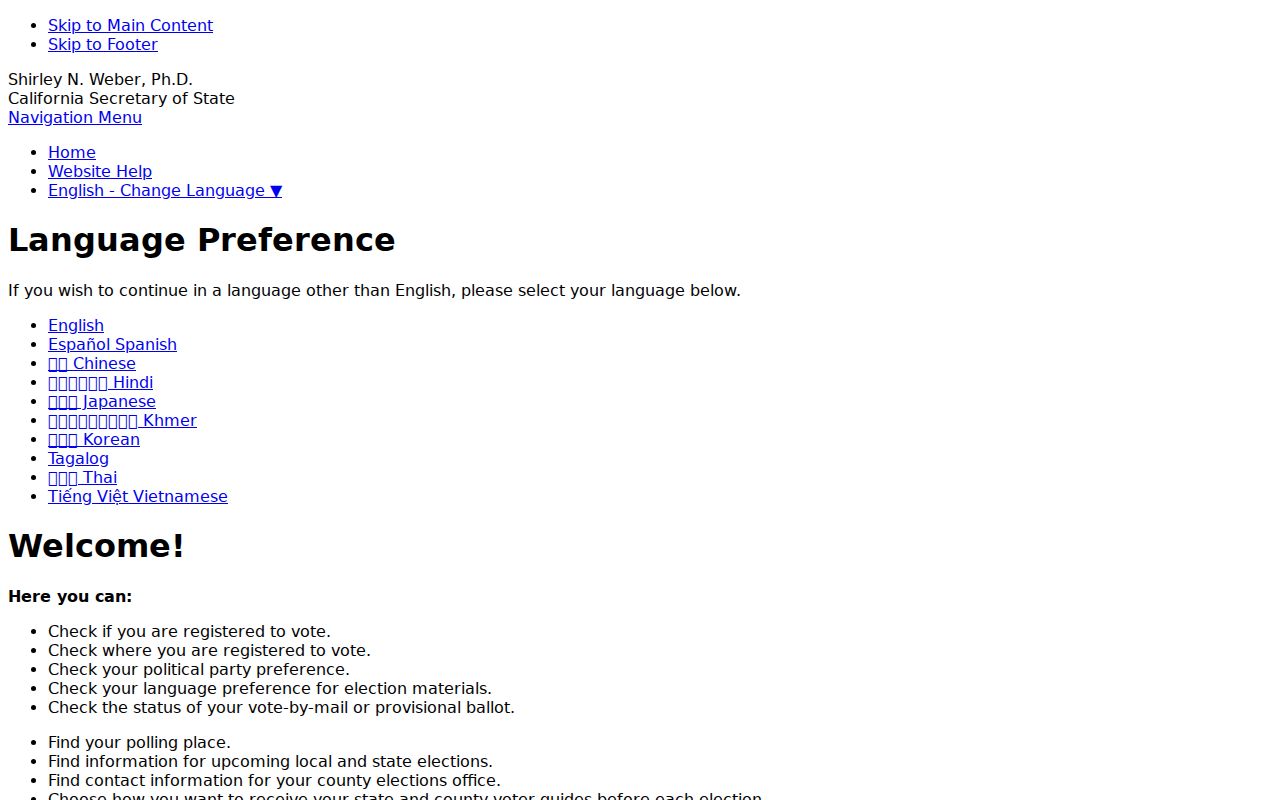
California My Voter Status is a self-lookup, not a casual Soledad street directory. It asks for first name, last name, date of birth, and one identity route: a California driver license or ID number, or the last four digits of a Social Security number. A successful self-check can return registration status and location, party preference, language preference, polling information, and vote-by-mail or provisional status.
Monterey voter data requests are different. A qualified requester must submit a wet-signed application with identity and purpose details, select a permitted use, and identify the geography or specific voters sought. The application lists options such as political, academic, media, legal, and governmental uses. County review normally takes two to three business days, with cost quoted after review. Driver license numbers, Social Security digits, unique identifiers, and signatures are excluded from the disclosed file.
Search boundary. A voter status result confirms a person's own registration record. It does not prove that every person at a Soledad address is registered there, and Elections Code section 18109 makes knowing unauthorized voter-data use a misdemeanor.
The California My Voter Status authentication page shows the identity fields behind a personal Soledad voter check.
Current Soledad Resident Directory Sources
Different rolls answer different questions. The coverage below keeps a resident directory result in its proper lane. Registered voters are not the same set as property owners. A license address is an address of record. A business filing can connect an officer or agent to an entity without proving a home address.
| Source | Useful for | Keeper | Access |
|---|---|---|---|
| Parcel and assessment records | Owner, situs, value, exemptions | Monterey County Assessor and GIS | Free inquiry after parcel identification |
| Recorder instruments | Parties, deeds, liens, dates | Monterey County Recorder | Historical index and counter research |
| Court case index | Party, case type, status, filing date | Monterey Superior Court | Portal and clerk counter |
| Business and license registers | Agents, officers, credentials, status | California SOS and DCA boards | Free online systems with limits |
| Municipal and library records | Incidents, local notices, historic names | Soledad City and MCFL | Archive, request, or in-library access |
A single result is a lead, not a complete residents directory entry. Use two independent attributes before treating two records as the same person. The one-person Soledad resident lookup workflow is the better fit when a name, not a street, is the starting clue.
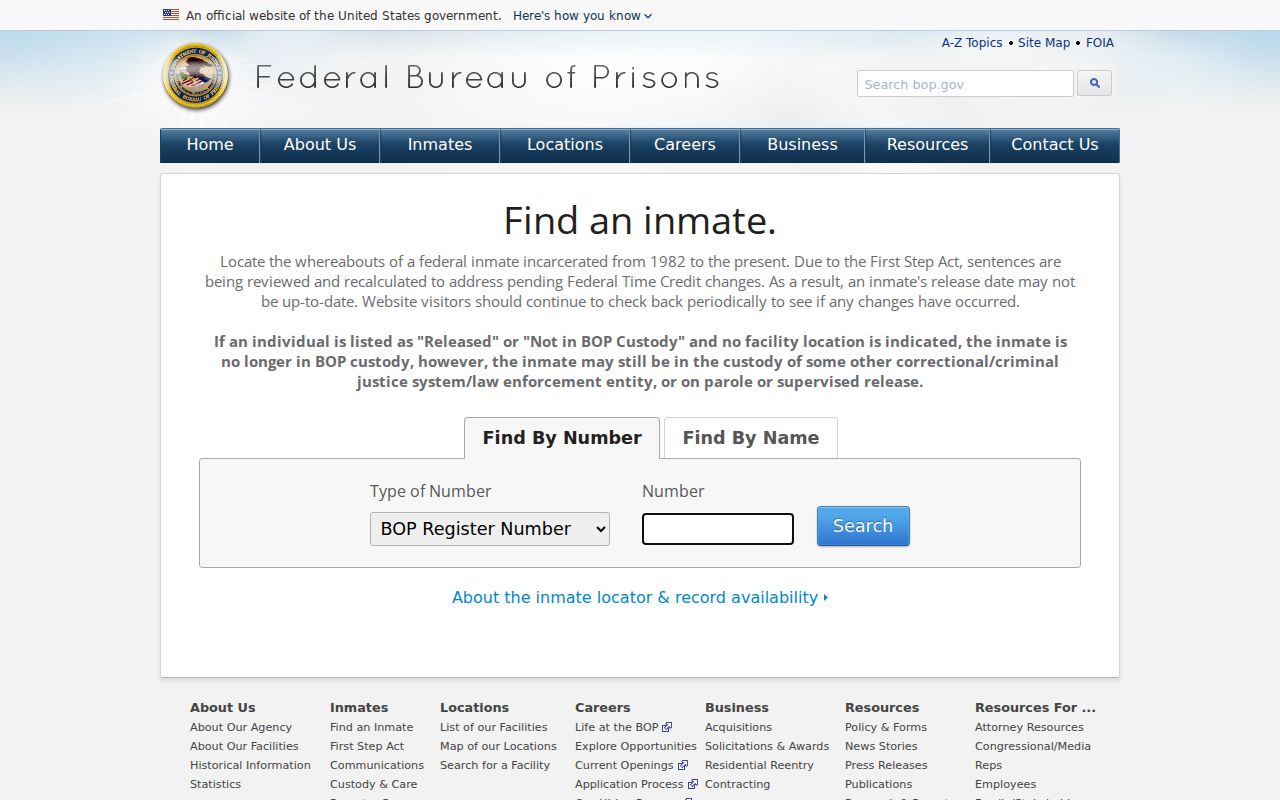
Custody tools are separate from ordinary address records. The Monterey County Sheriff In Custody Log is a current county log, while CDCR CIRIS covers California state custody and the Federal Bureau of Prisons locator covers a federal register. Each result is time-specific and must be read under its own access and lawful-use limits.
The Federal Bureau of Prisons locator shows the federal custody search route that belongs beside, not inside, an ordinary Soledad resident directory.
Soledad Residents and ZIP Geography
Soledad has one verified ZIP code, 93960, but that postal label reaches beyond the incorporated city. It includes correctional facilities, nearby farms, and extensive unincorporated Monterey County. The city's development and geography document reports 185 farm operations across the broad ZIP geography. A person can use a Soledad mailing address while living outside city limits, so ZIP evidence must not be treated as a municipal boundary.
LAFCO measured 2,993.6 acres within city limits, described a proposed 653.6-acre expansion, and identified a separate 68.7-acre sphere west of the boundary. Miramonte shared Soledad mailing geography while outside the then-current boundary. Census ZCTAs approximate ZIPs, but neither a ZIP nor a ZCTA is the same thing as a city. The residents-by-ZIP page owns that geography in detail.
Soledad Resident Business Trails
When the clue is a trade name, credential, or public filing, a state register can be more useful than a general residents directory. California Bizfile accepts a business name or file number. A basic entity-name search needs at least three characters, behaves like a contains search, and caps results at 500 close matches. Advanced filters add entity type, status, and initial-filing date. Filing PDFs are free; certified orders require an account.
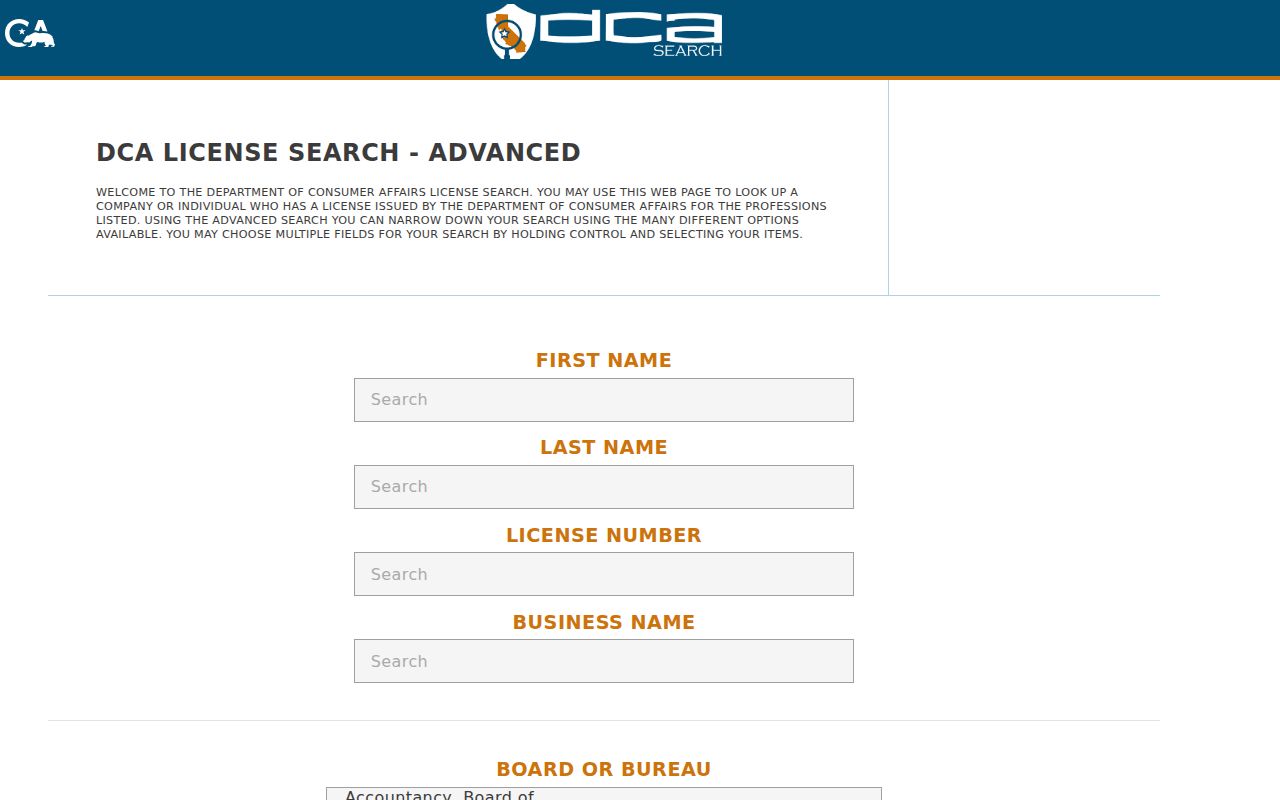
DCA's advanced search accepts board, license type, license number, business name, first name, last name, and registry number. It can add cities, counties, status, discipline, and public documents. Contractor and alcohol-license systems add Soledad-relevant city or ZIP searches. These records show a business affiliation, credential, premises, or address of record. They do not turn a license address into proof of a private residence.
The official California Bizfile search shows the business-record route used for a Soledad filing.
For an advanced credential search, the California DCA portal provides the state-level fields that a Soledad name search may need. Start with the narrowest name or credential clue and confirm any address against the record's purpose.
The DCA advanced license search demonstrates how a professional record can be filtered without turning it into a general people list.
Soledad Resident Vital Copies
Monterey County Recorder's vital-record route covers county birth, death, and nonconfidential marriage copies, with CDPH Vital Records as the statewide fallback. California does not use a simple rule that opens every birth after one number of years. Authorized certified copies require a statutory relationship or other qualifying route. Informational copies of many nonconfidential records may be available, but they carry a legend and cannot establish identity.
County applications ask for the event type, names, date and place, related facts, applicant relationship or authorized category, purpose, copy count, contact details, and a sworn signature. Mail requests for authorized copies require notarization. CDPH's 2026 fees are $31 for birth, $26 for death, $19 for marriage, and $18 for a dissolution certificate. A failed search produces a Certificate of No Public Record and retains the search fee.
- Authorized certified copy
- A copy available to a person who meets the law's relationship or authorization rule.
- Informational copy
- A record copy marked so it cannot establish identity.
- Confidential record
- A marriage, adoption, or sealed record with a separate access rule.
Soledad Resident Record Fallbacks
Online access is only one channel. The City Clerk accepts a request by electronic form, email, fax, or counter delivery and identifies the department holding responsive records. The county Recorder accepts counter research and mail copy orders that include a document number or reel and page, recording year, one indexed party name, and document type. The Court Clerk can search files at the counter when the portal does not reach the needed era.
Since January 1, 2026, AB 370 has amended Government Code section 7922.535 so a qualifying cyberattack that prevents server access can support the limited unusual-circumstances extension. It does not excuse an agency from responding to records that remain accessible.
Soledad Branch at 401 Gabilan Drive offers computers, scanning, printing, English and Spanish collections, and local newspapers. Its catalog confirms Soledad Bee and Gonzales Tribune microfilm, though exact reel endpoints need librarian confirmation. The Monterey FamilySearch Center supplies local books, computers, and scanners. The Soledad Historical Society holds community material and opens seasonally, for events, or by appointment.
Note: A narrow request with an APN, case number, recording year, or event date gives the custodian a usable starting point.
Historical Soledad Resident Directories
Historical Soledad residents directory work starts at county scale. McKenney's District Directory covers adult residents in 1879. The reconstructed 1889 Monterey County adult-resident directory lists township residents and was published in 2003 by the Monterey County Genealogy Society. That 1889 volume matters because most 1890 federal population schedules were destroyed.
Telephone-directory evidence is cataloged from 1948 forward, and a 1992-1993 Southern Monterey County directory includes Soledad. Soledad Bee microfilm, founded in 1909, can add school lists, visitors, marriages, deaths, property notices, and family names. The three-sheet September 1910 Sanborn map fixes structures and blocks at one point in time. A full account of the collections and shelf locations appears in the Soledad city directory collections.
Soledad Historical Directory Trail
The 1889 adult-resident reconstruction is a useful human-use record because it bridges a gap that a searcher cannot fill by simply opening a missing federal schedule. Extract the person's name, township, and occupation, then pair the result with the 1880 or 1900 census. Add a county telephone directory, a Soledad Bee notice, a deed, or a probate file only when the dates and name variants line up.
Mission Nuestra Señora de la Soledad registers add an older layer. A person may appear under an Indigenous name and a Spanish baptismal name. The National Park Service and Huntington's Early California Population Project can help interpret that evidence, but a register entry is not a modern address result. It is a clue to kinship and identity that needs careful source comparison.
Soledad Resident Name Variants
Soledad's records reward patient normalization. Try initials, hyphens, accents, married and maiden names, and Spanish compound surnames. Keep a small source log with the exact spelling, record date, address type, and custodian. A parcel result and a court result may refer to the same person only after an independent detail agrees.
For an heir trail, begin with the deceased person's obituary or vital event, then inspect a probate petition or order and any distribution deed. For a former classmate, use yearbooks, newspapers, library collections, and lawful alumni contacts. For a business owner, pair Bizfile with a fictitious business name or license record. Adoption and birth-parent records follow confidential CDSS, CDPH, or court-authorized processes, not an ordinary name search.
Note: An address of record can be a situs, tax-mailing, voter-residence, service, or license address; each describes a different connection.
Privacy Choices for Soledad Records
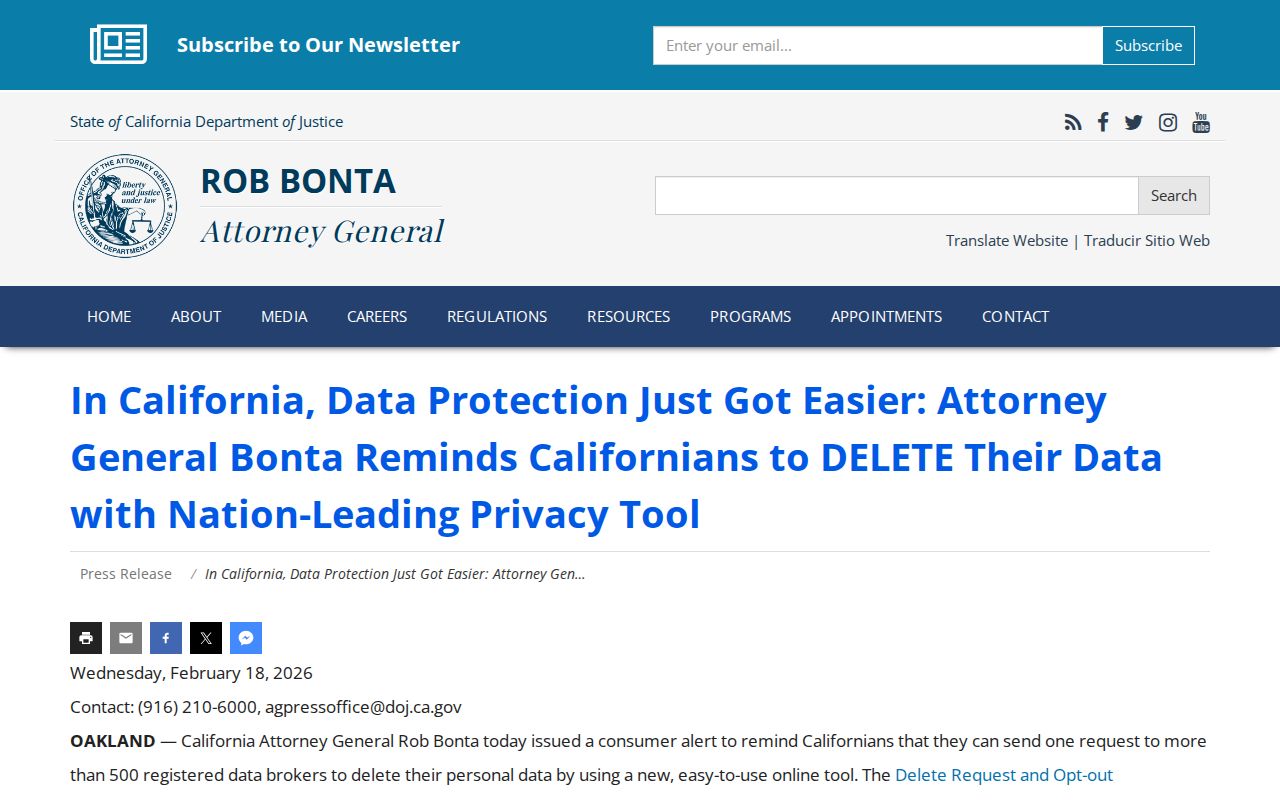
California privacy law gives qualifying people rights to know, delete with exceptions, correct, opt out of sale or sharing, limit sensitive-data use, and avoid discrimination. Global Privacy Control can signal an opt-out. The California DROP platform at privacy.ca.gov/drop sends one free deletion request to registered data brokers. Broker processing began August 1, 2026, after registration opened in January 2026.
Safe at Home, under Government Code sections 6205-6216, offers eligible threatened people a substitute address, mail forwarding, an agent for service, confidential voter registration, and some DMV suppression. It does not erase old public records. DMV data is separately restricted by the federal DPPA. Use only lawful personal or family-history purposes, and verify any record with the office that keeps it.
The California Attorney General's DROP announcement places the deletion platform in the wider privacy choices available to a Soledad records researcher.
Soledad Record Fees and Timing
Cost and timing change by record type. The most concrete local address route is Soledad's Building Research Record form: it asks for an address or APN and returns permit number, issue date, final date, and purpose for $58.50, no later than ten business days after payment. The Recorder's copy fee is $2 per page, with $2 for certification or a document. Court copies are $0.50 per page, and certification is $25 per document plus pages.
| Need | Known research point | Best starting channel |
|---|---|---|
| Vital copy | 2026 birth $31; death $26; marriage $19; dissolution $18 | Monterey Recorder or CDPH |
| Building history | $58.50; return no later than ten business days | Soledad Building Research form |
| Deed copy | $2 per page; certification/document $2 | Monterey Recorder counter or mail |
| Court file | $0.50 per page; certification $25 plus pages | Monterey Superior Court clerk |
Fees do not make a record public, and a free index is not the same as a certified copy. Check the current county and state fee schedules before sending money or personal information.